I had a surplus of free-range eggs today and decided to do something about it. The first thing that came to mind was to make a tortilla de patatas, which is something I don’t make often enough. So I went ahead with making one and suddenly realised… hey, this is way different to how I used to make them. A quick check on the first tortilla recipe I posted here in 2010 proved the point. I mean, both recipes are valid, but my love (and knowledge) of extra virgin olive oil has steadily increased over the years and this latest tortilla recipe shows that. My experience of other tortillas from different parts of Spain has also increased and so, without noticing, I had been adapting my tortillas at home based on different ones I’ve tried and enjoyed and I have discovered that, frankly, there are a gazillion ways of making this “simple” potato omelette.
Today’s tortilla was a bit more elaborate, mostly in the time involved. Caramalised onions, potatoes slowly “poached” in evoo… but you could also just sautée some onions and cook the potatoes more quickly in less oil by covering them with a lid. Up to you. Unlike some tortilla purists out there, I really don’t think there is a “wrong” way of making a tortilla de patatas other than it MUST be flipped. If you finish it in the oven or under a grill it’s a frittata. Sorry, them’s the rules. Anyhow this is how I did it today and omg it was so good.
Update: I’ve added an extra “trick” of using extra yolks. Apparently it’s what all the bars and restaurants in Santiago do.
Ingredients and instructions below…
- 2 large potatoes
- 3 small sweet onions, thinly sliced
- roasted piquillo peppers, sliced (optional)
- 6 free-range eggs, room temperature
OR 5 free-range eggs and three yolks - extra virgin olive oil
- salt to taste
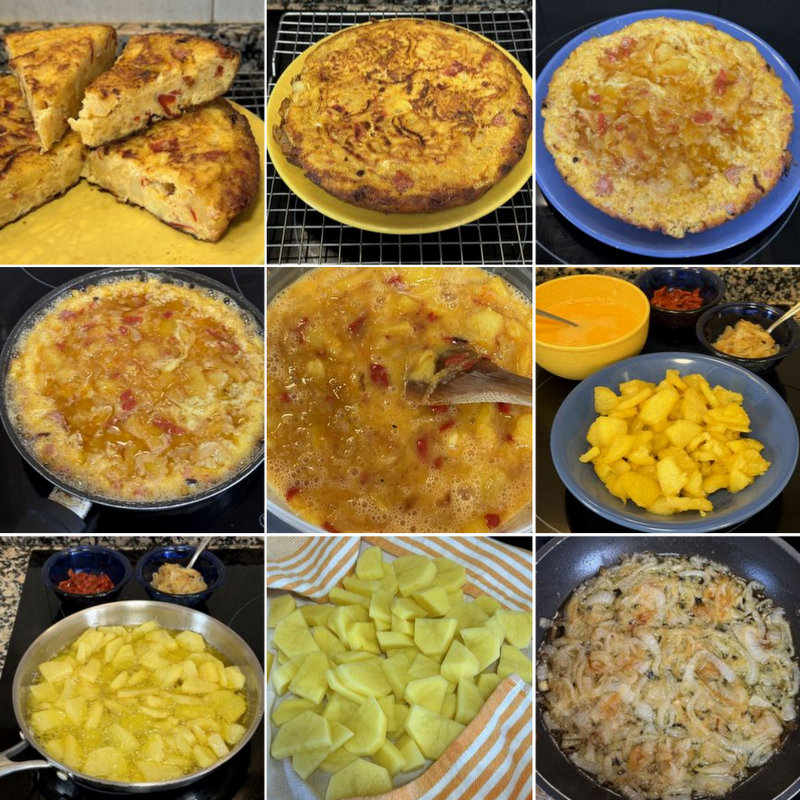
Peel and cut the potatoes into small slices and place in a bowl of cold water.
Sauté the onions in olive oil on medium-high heat to get them going. Then turn heat to low and slowly cook to caramalise them, stirring frequently. This will take about half an hour, maybe more, no rush. You’ll know when they’re done. Then remove them from the oil and set the pan aside (you’ll be using the leftover oil in the pan later).
Drain the potato slices and dry thoroughly in a tea towel. In a larger pan heat enough oil to cover the potato slices. Once hot, add the potatoes, stir them around a bit and then reduce the heat to medium. What you want to do here is “poach” the potatoes in the oil, not fry them, so keep stirring every 3-5 minutes for about fifteen minutes. When the potatoes are completely cooked remove them with a slotted spoon and let cool, adding salt to taste. I tend to “over salt” them a bit as when you add the eggs and other ingredients it balances out.
Whisk the eggs and add the cooled potatoes, onions and piquillo peppers, mix well. In the original pan re-heat the oil (add a bit more if needed) and once sizzling pour in the omelette and even out the ingredients in the pan. Shake the pan and reduce the heat immediately to medium and cook until the omelette is about 2/3 cooked through (solid enough for flipping).
This is the tricky part, but less tricky if your omelette is 2/3 cooked through. Slide it onto a plate, cover it with the pan… then flip it over. Don’t worry if it’s a bit messy, you can “tuck in” the edges once the omelette is back in the pan This next part is up to you. Although I quite like the soft runny tortillas from the north of Spain, I actually prefer mine at home to be cooked through. So continue cooking on med-low heat until the tortilla is done to your liking. Then put a fresh plate over the pan, flip it once more and let cool on a rack.
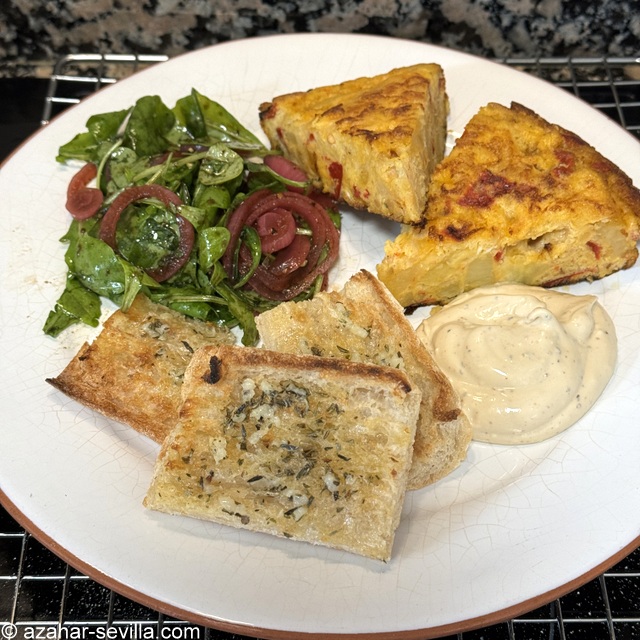
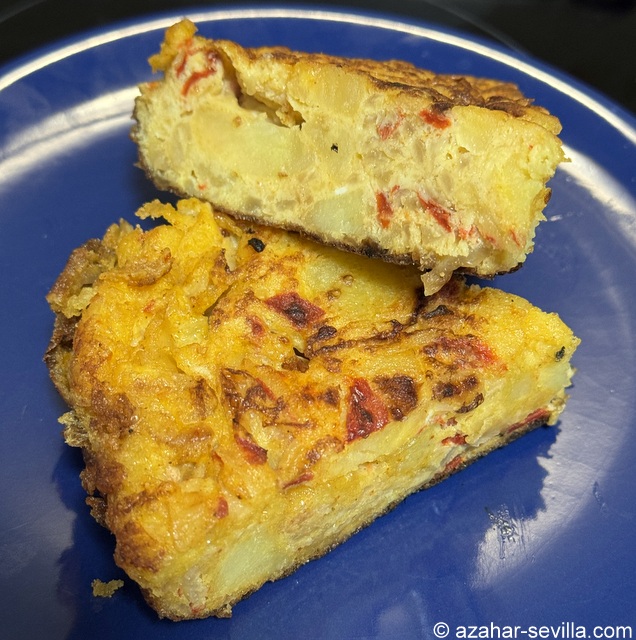
If I posted this photo on Twitter I’d get so much grief about my “tortilladrillo” (tortilla brick) because it’s not all gooey with runny egg spilling out all over the plate. But I don’t care about those guys. Between the caramalised onions and confit potatoes there is enough olive oil in this omelette to make it super soft and tender inside with a slightly crispy exterior.